
When the Territory Speaks: Participatory Mapping from the Voices of Atacames
By: Cindy Arroyo
A map can show streets, neighborhoods, and boundaries. But it can also reveal where we feel safe, where fear resides, and how racism and violence permeate everyday life.
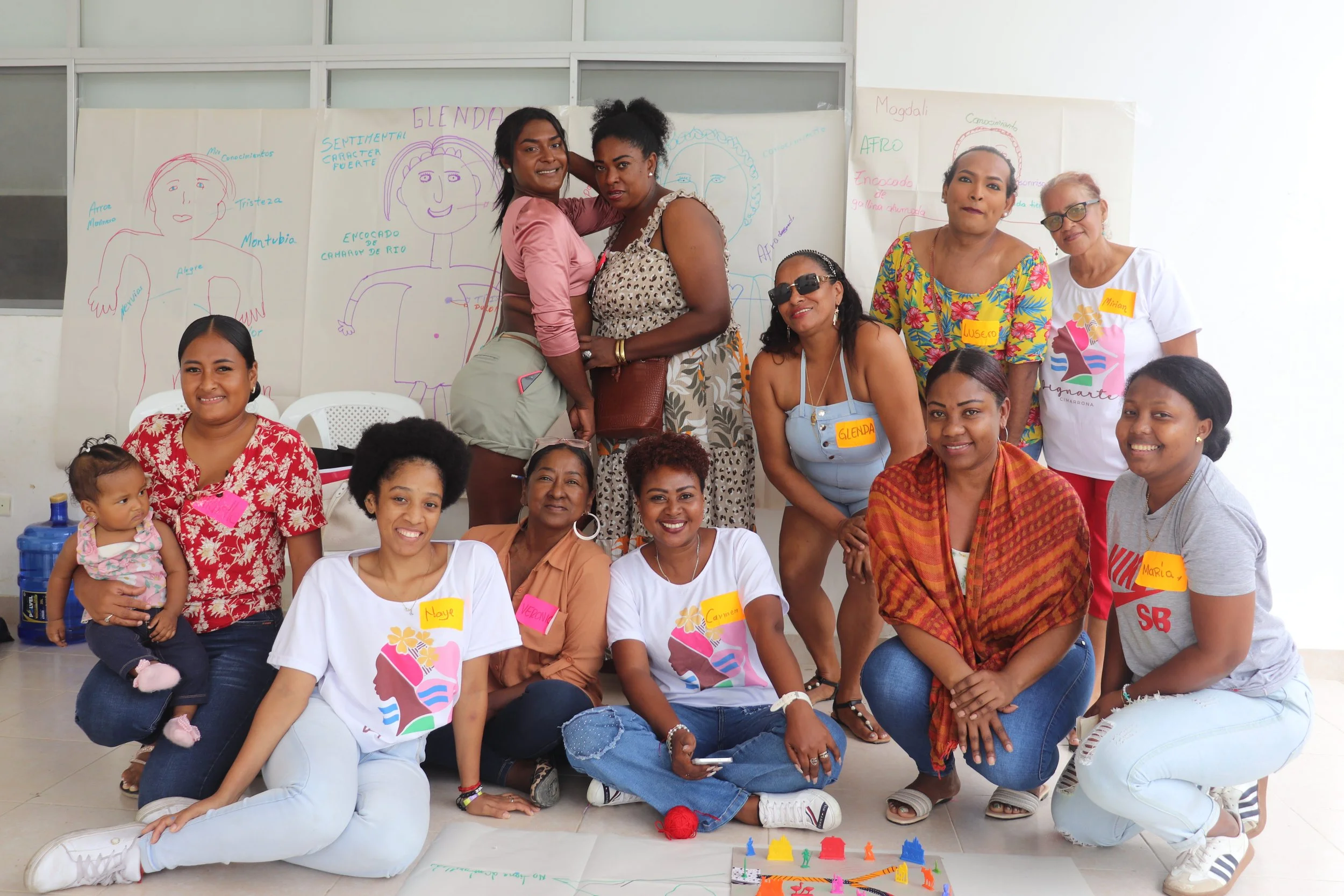
In the canton of Atacames, this was the approach behind the participatory mapping process, the starting point of an initiative led by peer researchers, who organized a gathering with people from different sectors of the territory to share, engage in dialogue, and collectively build knowledge about the realities affecting their communities.
The workshop began in an unusual way: before talking about the territory, we talked about the body. Each participant introduced themselves by saying their name, the emotion they arrived with, and the place where that emotion, or pain, manifested physically. Some pointed to their chest, others to their stomach or back. Recognizing ourselves through our emotions made it possible to inhabit the present and understand that territories are also experienced through the body.
From there, the participatory mapping began. The first step was to draw their homes and identify those spaces where they feel safe. The conversations revealed the importance of everyday spaces: the bedroom, dining room, kitchen, or living room. For some people, safety was associated with the tranquility of their bedroom; for others, with the possibility of spending time with their family or engaging in activities that bring them well-being.
However, these accounts also revealed important changes in the way people inhabit the territory. During the plenary discussion, reflections emerged on the increase in insecurity and how it has transformed dynamics of leisure, gathering, and freedom.
“Where I always eat is in the dining room, at the table… I am happy cooking, organizing, and cleaning.”
“If my house is not clean, I am not happy.”
“My safe place is my bedroom. That’s where I feel comfortable.”
Several people recalled that they used to be able to go out freely to recreational spaces or nightclubs, whereas today they feel that the safest places are their homes and gatherings with friends in private spaces. These stories showed that safety does not always depend on a door or a wall, but on relationships, routines, and the possibility of feeling at peace within the home.
During the collective conversation, a theme shared by many people emerged: insecurity has transformed the ways in which leisure and freedom are experienced. Several recalled that they used to go out freely to nightclubs or public spaces; today, many prefer to meet with friends in their homes because they feel more protected there.
Afterwards, the individual drawings became a shared map. Each participant located their home on a map of the canton, creating a cartography built by those who know the territory because they inhabit it every day.
This exercise made it possible to visualize how the experiences and perceptions of people living in different sectors of the territory are distributed. The group also discussed the structural changes Atacames has undergone over the years. While some people highlighted progress related to infrastructure and access to basic services, others pointed out that there are still sectors where these needs have not been fully met. Most agreed in describing Atacames as a tourist territory, a characteristic that has driven urban growth and the construction of new infrastructure.
The second part of the workshop was devoted to reflecting on the different forms of gender-based violence and discrimination faced by people living in the canton.
One of the central themes was racialization. While some people said they were unfamiliar with the term, others associated it with race and racism. Through collective dialogue, a broader understanding was developed: racialization does not operate solely through individual acts, but also as a system that organizes opportunities, rights, and life experiences.
The conversations made it possible to identify how this system is expressed in everyday situations, such as difficulties accessing employment because of being a Black person, experiences of racism in different provinces across the country, and racist comments within family environments.
The workshop also became a safe space for sharing experiences related to racialized gender-based violence. The participants reflected on the normalization of different forms of gender-based violence, the difficulty of talking about them, and the ways in which these affect Black, Afro-descendant, impoverished, and other bodies. Testimonies emerged related to physical violence, aesthetic violence, and other forms of discrimination that often remain invisible.
Several people shared experiences they had lived through at different stages of their lives; others recounted situations they had witnessed in their neighborhoods, communities, or through social media. Each story contributed an important piece to understanding how racism and gender-based violence manifest in everyday life and how they affect differently those who inhabit the territory.
What changes when communities not only participate in research, but also produce knowledge about their own territories?
The participatory mapping process demonstrated that communities possess fundamental knowledge for understanding the realities they experience. Far from being merely participants in an activity, those who attended became producers of knowledge about their experiences, their memories, and the challenges they face in their territories.
The peer researchers played a key role in this process. Because of their closeness to the territory, they facilitated spaces of trust where it was possible to engage in dialogue about complex issues, share personal experiences, and develop collective analyses based on the lived experiences of those who inhabit Atacames.
The maps created during the workshop do not only show streets, homes, or sectors of the canton. They also reflect emotions, memories, senses of belonging, concerns, and forms of resistance. They make visible what often does not appear in official records about how safety, discrimination, racism, and gender-based violence are experienced in everyday life.
When communities produce knowledge about their own territories, research stops looking from the outside. It becomes closer, more situated, and more capable of understanding the realities it seeks to transform. Maps become collective memory, evidence of inequalities, and a tool for understanding how racism and gender-based violence are inscribed both on the body and in the space we inhabit; as well as providing a deeper understanding of the challenges and strengths that shape the canton of Atacames.
