“Un Quilombito Visual”: an artistic and political expression of welcoming rebellion in Esmeraldas.
por: María Preciado y Samira Folleco
“Quilombito” comes from quilombo, a Kimbundu word that originally referred to a camp or village. During colonial times in the Americas, quilombos became spaces where enslaved Black people who had escaped slavery built communities, autonomy, and collective life. In “Un Quilombito Visual”, the word is reclaimed to name a space where Black researchers come together to look, document, and create knowledge from what they know and experience in their territories.
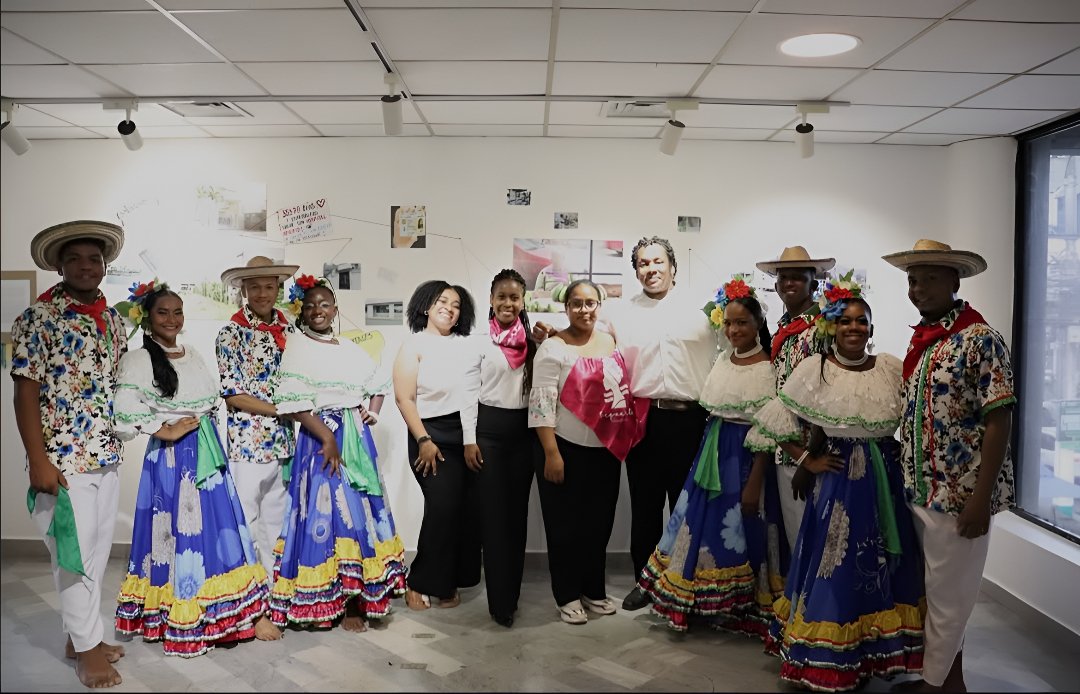
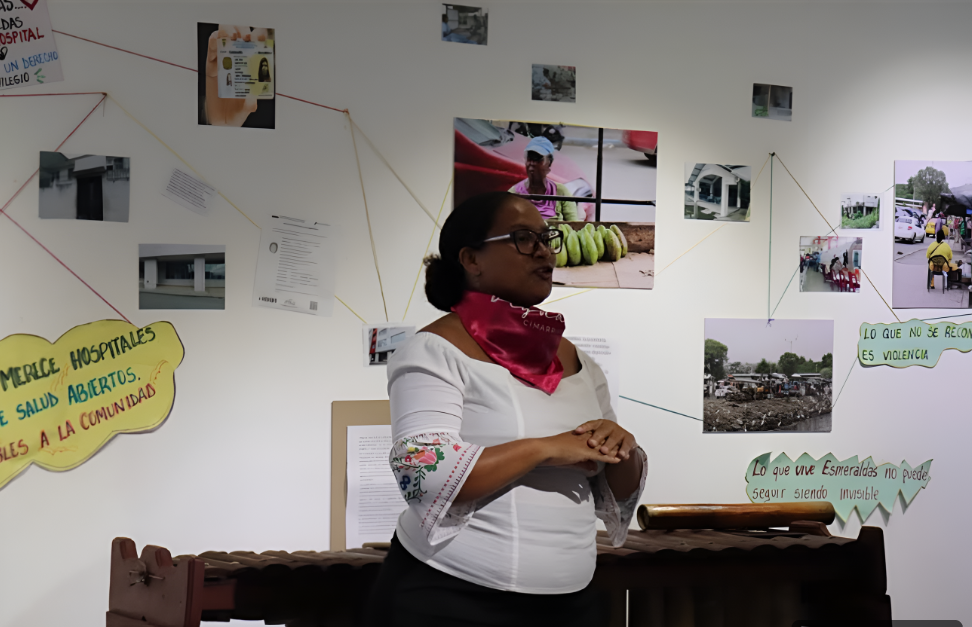
“Un Quilombito Visual” was the name given to the photographic exhibition created by the peer researchers from the Esmeraldas canton. The exhibition brought together part of the photovoice process they carried out as one of the creative methods of DignArte Cimarrona, which they later decided to share with other people from their territory. It was an opportunity to show, through their own perspectives, some of the realities that shape everyday life in Esmeraldas and to open conversations about those things that often end up being normalized.
In the following lines, you will find a text written in six voices. Geraldine Benalcázar, Carolina Estacio, Valeria González, and Andrés Bagüí, peer researchers and creators of the photovoice exercises, share from their own experience what it was like to build and carry out “Un Quilombito Visual”, after moving through their territory with a different and more conscious perspective. They are joined by the voices of María Preciado, who closely accompanied this research and creative process, and, Samira Folleco, who accompanied some of the DignArte Cimarrona gathering spaces, dialogues that were revealing at the time and that found in this exhibition a way to give material form to and mobilize many of those reflections.
Rather than simply telling the story of an event, through these six voices we seek to recover an experience and what it meant to make it possible.
On July 20, the Museo de Esmeraldas, located on Piedrahita Street in the city center, became the place where the photographs found another space to be seen and discussed. The images spoke of infrastructure, difficulties in accessing public healthcare, and different forms of state abandonment affecting the territory. They also showed how these conditions affect Black and racialized women in Esmeraldas differently, women who sustain everyday life and whose contributions are not always recognized.
The photographs and installations also questioned the indifference of those who make decisions about the territory. However, the exhibition was not made up solely of denunciations. There was memory, affection, questions, and a radical desire to transform everything, to transform all that which hurts. All of this was brought into dialogue within the museum, making “Un Quilombito Visual” an artistic and political expression of welcoming rebellion.
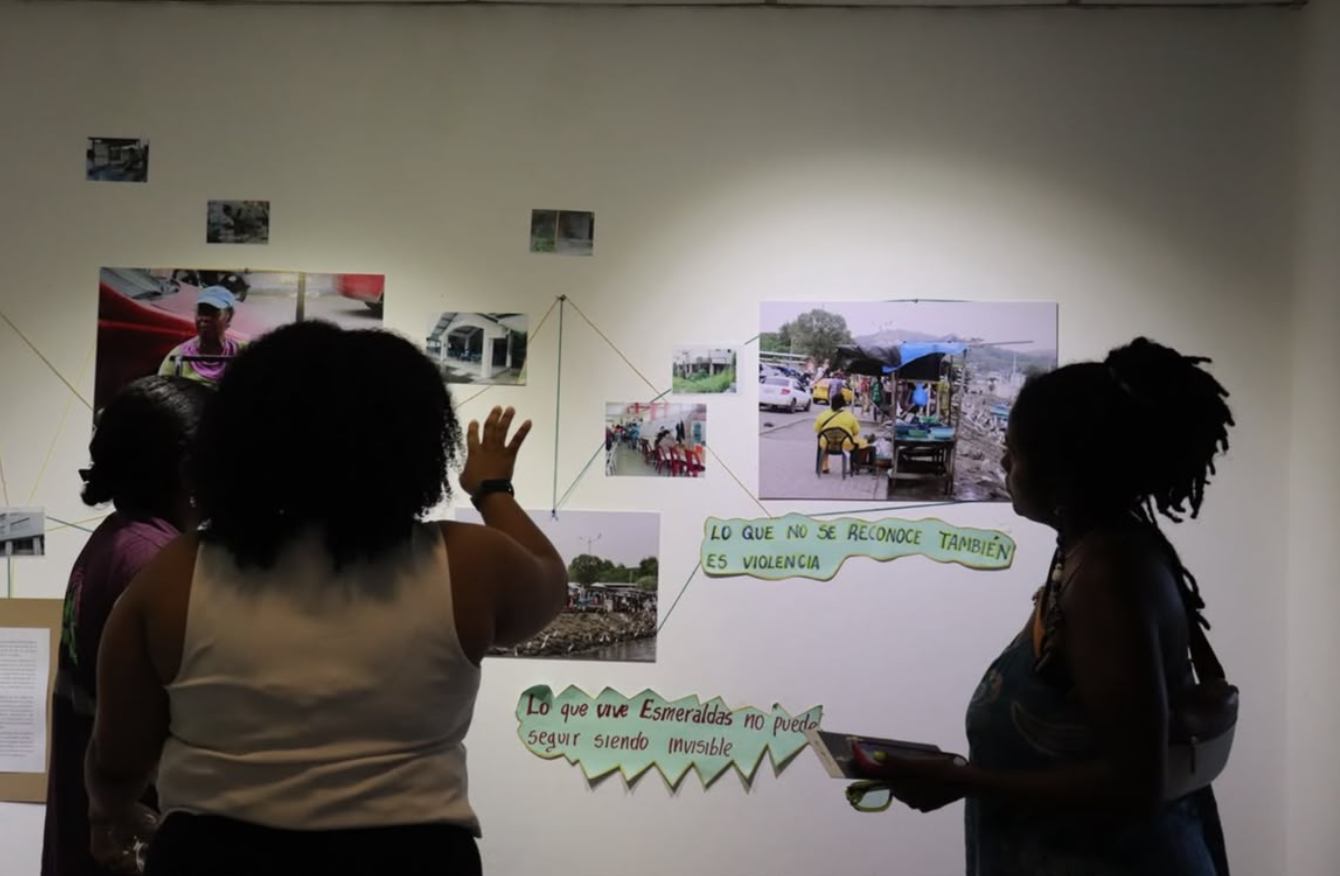
For those of us who accompanied the process and were there that day, each photograph could raise a question, bring back a memory, or spark a conversation. But for those who created them, what did it mean to make these photographs, choose them, and bring them into dialogue in an exhibition?
Valeria explains that “it meant becoming aware of many things that we see every day and eventually end up normalizing. The exhibition went far beyond our expectations because, as we were putting it together, I realized that we were not only taking photographs, but also showing different realities that Esmeraldas experiences and that are often not made visible. It was also a way of questioning myself and questioning ourselves about what we are seeing and about what, in one way or another, we also experience as a people.”
María adds that seeing these stories inside the Museo de Esmeraldas filled her with pride and emotion, “because it shows that from our communities we can tell our own realities and contribute to building a society where women can live with dignity, respect, and without violence.”
That is what it meant. But bringing those reflections into material form also meant learning how to build the exhibition collectively. Carolina recalls that it was a very rewarding experience “to share what we had researched, what we know about other people and about our city, the reality of life as it truly is. It was very moving, but it was also wonderful to learn much more about these issues, to organize ourselves with our peers, and to prepare the materials that were used. Thanks to that, we also expanded our knowledge.” Regarding the installation, she adds that it involved “preparing the room with the materials so that everything would look nice and, above all, so that the photographs could speak for themselves. We organized the ideas so that everything would make sense.”
Valeria explains that deciding where to place each photograph was also part of the learning process. “We wanted each photograph to have a meaning and everything inside the museum to tell a story. We realized that it was not simply a matter of putting the photographs anywhere. We had to think about which image should come first, which one should follow, and how one could connect with the next. We felt that the other elements helped create the atmosphere and complement what we wanted to convey. We all contributed ideas. I think that part allowed us to understand that an exhibition does not depend only on the photographs, but also on how you present them and how you invite people to move through the space and connect with them.”
For Andrés, it was also his first time participating in an exhibition. “We had one or two difficulties when trying to install everything in a specific order and figuring out what to use to hang the portraits and other objects, but it was really fun to participate in this group dynamic, to figure out what worked and what did not. The museum staff also gave us suggestions about how it could be done, since it was my first time in an exhibition.”
For all of us, it was a first in many ways. There were nerves, the difficulties that come with setting up an exhibition, and everything involved in turning a research and creative process into an exhibition. But there was also the possibility of occupying a space like the Museo de Esmeraldas to tell, from their own perspectives, what happens in their territory.
“Un Quilombito Visual” was made up of photographs that spoke of absences, neglect, and violence, but also of affection, anger, joy, and hope. Listening to Geraldine, Carolina, Valeria, and Andrés speak about their photographs made it possible to understand that this was not simply about displaying images, but about building a way of looking at and telling the story of Esmeraldas from within.
Perhaps that is one of the most important political dimensions of this experience. For a long time, different spaces have spoken about Afro-descendant people without necessarily including their voices. This time, those who embody and live these realities had the opportunity to photograph them, name them, organize them, and share them within an institutional space.