Who is working to eradicate gender-based violence, and what are they doing?
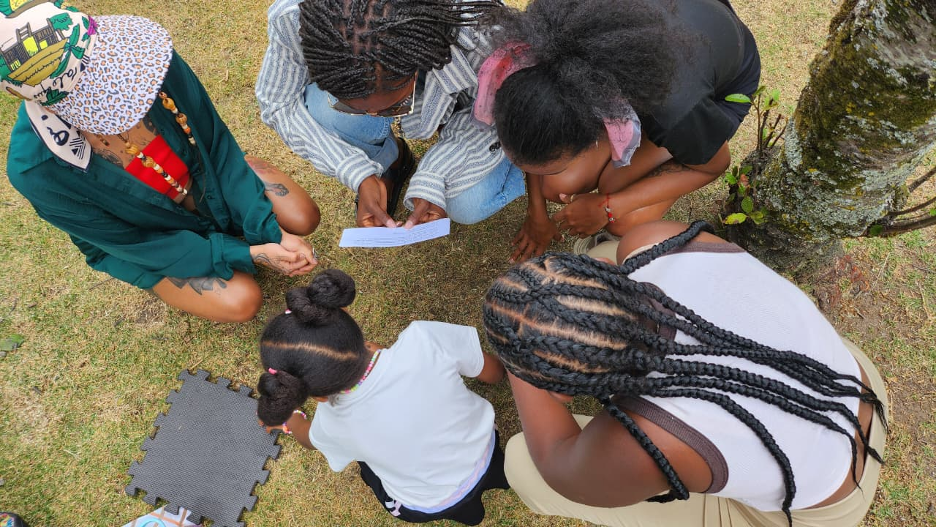
Photograph taken by the author
By Cindy Arroyo
In this post, Cindy Arroyo, DignArte researcher based at FLACSO, examines the actors and strategies involved in efforts to eradicate gender-based violence in Ecuador. Cindy situates these efforts within recent political shifts and reflects on the growing importance of feminist organisations and art as forms of resistance and care.
Before addressing the central question of this study, it is imperative to examine Ecuador’s political and institutional landscape, alongside the contemporary stance of the State regarding the protection of women’s rights and feminised bodies. On 15 August 2024, President Daniel Noboa issued ten executive decrees facilitating the consolidation of multiple government entities, including the Ministry of Women and Human Rights. Executive Decree No. 101 stipulates that the Ministry of Government will assume all powers, responsibilities, functions, obligations, representations, and delegations previously attributed to the Ministry of Women and Human Rights.
Numerous civil society organisations have warned that this decision represents a setback in the guarantee of women’s rights, as it undermines the functions of an institution whose explicit mandate was to ensure their protection and to eradicate gender-based violence. The concentration of competencies within a ministry whose primary priority is security and the fight against organised crime raises serious concerns about its capacity to respond effectively and with specialised expertise to gender-related issues. In this context, the following question arises: how can a single state body adequately perform the functions that were previously distributed across multiple institutions dedicated to human rights?
From a governmental perspective, the current landscape reflects ambiguity regarding which sector of the state apparatus will genuinely commit to the eradication of gender-based violence. In light of this limitation, the fundamental role of feminist organisations and collectives, such as Fundación Aldea, CEPAM, among others, that have sustained processes of support, advocacy, and activism in defence of the rights of feminised bodies becomes increasingly significant.
At both regional and international levels, organisations such as UN Women, CEDAW, UNHCR, and UNICEF are recognised for their contributions to strengthening policies aimed at combating gender-based violence through international agendas, programmes, and agreements. Normative frameworks such as the Convention on the Elimination of All Forms of Discrimination against Women (CEDAW) and the United Nations Declaration on the Elimination of Violence against Women (1993) serve as essential reference points for state action.
Within the framework of the DignArte research project, beyond analysing gender-based violence against racialised women, it is also crucial to explore the role of art as a mechanism of resistance, healing, and sustainability in the face of such violence. In the Ecuadorian context, notable artistic efforts have redefined violence through creative expressions, exemplified by the murals of María Ornella, the illustrations of Annabella Valencia, the clay models of Javier Ayala, the photographs of Kath Guerrero, the graphite portraits of Dick Vera, popular batucada with its collective percussion, and cultural groups such as Martina Carrillo and Casa Yemanyá.
These artistic practices open up a field of analysis that reveals how art not only constitutes a form of denunciation and visibility, but also a strategy for making processes of coping with and healing from violence against racialised women more sustainable.